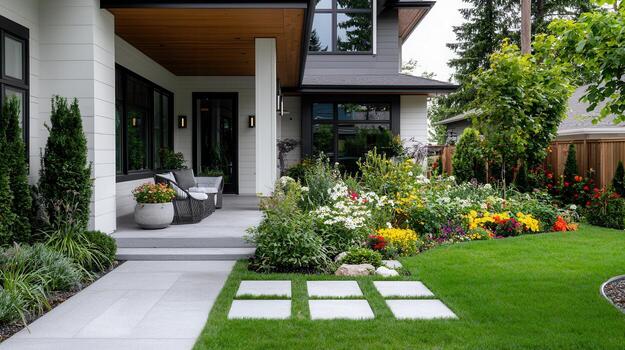
The most inviting outdoor spaces do not feel separate from the house. They draw you outward gently, offering a reason to linger and a clear sense of welcome as you return inside.
Start with the route through the space
Notice how you move between the door, the garden and the places you like to sit. A path can make that movement feel effortless. Changes in texture, a simple edge or a view framed by planting can make an ordinary route feel considered.
It helps to think about the garden from indoors as well. What catches the eye from the kitchen window? Which view might feel more restful with a little structure or greenery? The relationship between inside and out is part of the design.
Make room for a pause
An outdoor space becomes more useful when it offers a comfortable place to stop. That might be a small bench in morning light, a shaded table near the house or a quiet corner with a view of the garden. The best place is the one that suits your daily rhythm.
Choose materials that feel at home with the exterior of the house. Stone, timber, gravel and planting can create a gentle transition from built surfaces to living ones.
Plant for a sense of belonging
Planting brings softness and movement, but it also gives a garden its character. A balanced mix of structure, seasonal color and evergreen form can help the space feel inviting through changing weather. Native and well-suited plants can also make ongoing care feel more manageable.
With a clear path, a place to pause and planting that feels connected to the home, even a modest garden can become a room in its own right—open to the sky, but unmistakably part of home.